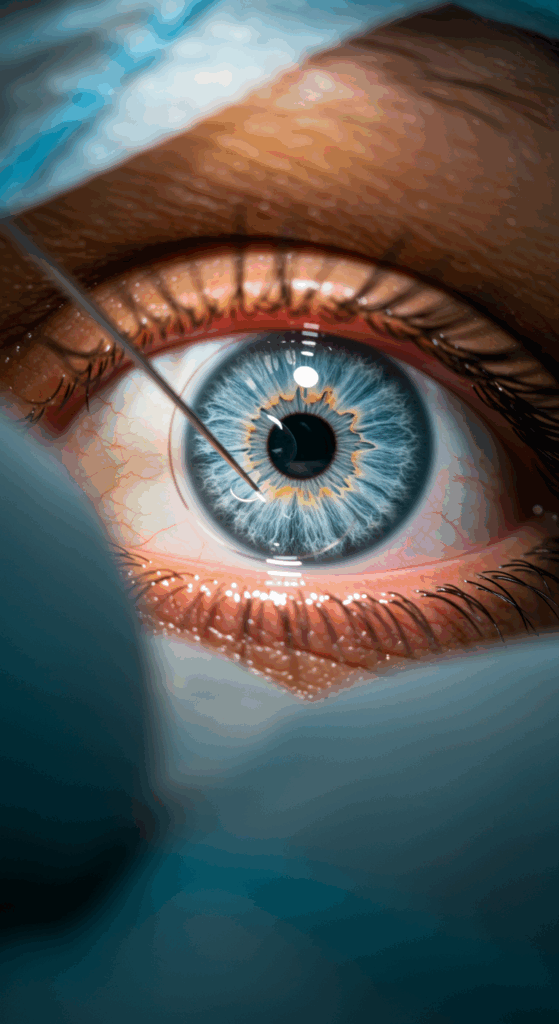
Implantable Contact Lenses
Implantable Contact Lenses, also known as Phakic Intraocular Lenses, are a safe and effective solution for correcting vision problems such as high degrees of nearsightedness, farsightedness, and astigmatism. Unlike standard contact lenses that are worn on the eye’s surface, ICLs are surgically placed inside the eye, between the iris and the natural lens. This advanced procedure provides clear, sharp vision without the need for glasses or daily lens wear, making it an ideal choice for patients who are not suitable candidates for LASIK or other corneal refractive surgeries.
Indications and Benefits
ICL surgery is recommended in the following cases:
• High refractive errors (severe nearsightedness or farsightedness) that cannot be corrected with LASIK.
• Thin corneas or irregular corneal shape that make laser correction unsuitable.
• Astigmatism correction alongside other refractive errors.
Key benefits include excellent visual quality, no removal of corneal tissue, a reversible procedure, and UV protection built into the lens material. Patients often experience rapid improvement in vision within the first 24 hours after surgery.
Procedure Steps and Possible Complications
The process starts with a detailed eye examination and measurements to select the perfect lens size for each patient. On the day of surgery, numbing eye drops are applied, and a tiny incision is made to insert and position the ICL behind the iris. The incision heals naturally without stitches, and the procedure typically takes 15–30 minutes per eye.
While the success rate is very high, potential risks may include:
• Increased eye pressure (temporary).
• Glare or halos at night.
• Infection or inflammation (rare).